When you click on links to various merchants on this site and make a purchase, this can result in this site earning a commission. Affiliate programs and affiliations include, but are not limited to, the eBay Partner Network.
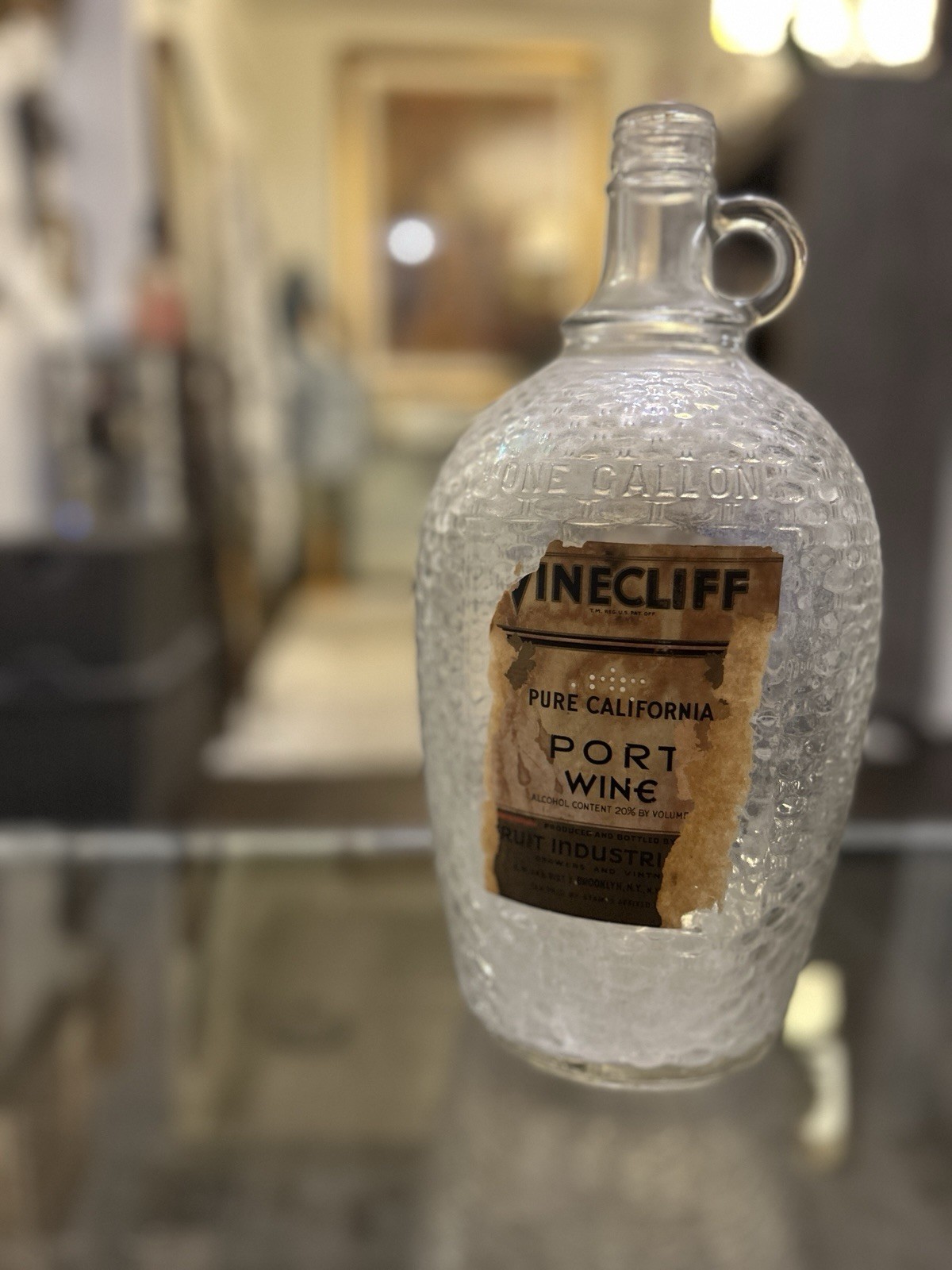
8” W x14” H
EUC no chips / cracks
Fruit Industries, Ltd. was a large, non-profit co-operative agricultural association formed in 1929 to manage California\'s grape industry during Prohibition. The company\'s most notable product was \"Vine-Glo,\" a grape concentrate sold to consumers who could then use it to make their own wine at home, which was a loophole during Prohibition. Although Fruit Industries was ultimately shut down after the federal government ruled that its products violated the Volstead Act, it became one of the largest wine-marketing organizations in the United States.
Formation and purpose
Founded in 1929 through the merger of several winemaking companies, including the California Wine Association, to bring order to the state\'s chaotic grape industry.
Operated as a \"super co-op\" with its main office in San Francisco.
It had 10 member wineries, owned by approximately 1,200 grape growers.
Prohibition-era activities
Vine-Glo grape concentrate: To find a use for wine grapes when wineries couldn\'t sell their products, Fruit Industries produced and sold concentrated grape juice bricks, marketed with warnings against using them to make wine.
Home winemaking: The concentrate was sold in a way that allowed consumers to add water, a packet of yeast, and wait for fermentation to produce wine at home.
Other products: The company also produced other concentrates like Virginia Dare and Wine-Haven, and later manufactured jellies, syrups, and vinegars.
Decline and legacy
Legal challenges: In 1931, Fruit Industries ceased selling its grape concentrate after a federal court ruled that making wine from concentrate was a violation of the Volstead Act.
Post-Prohibition: The company was reorganized, but a later 1936 advertising clock marks its existence and advertising during the 1930s.
The company\'s story is an example of how the wine industry adapted during the difficult years of Prohibition.