When you click on links to various merchants on this site and make a purchase, this can result in this site earning a commission. Affiliate programs and affiliations include, but are not limited to, the eBay Partner Network.
KATE TEST 2
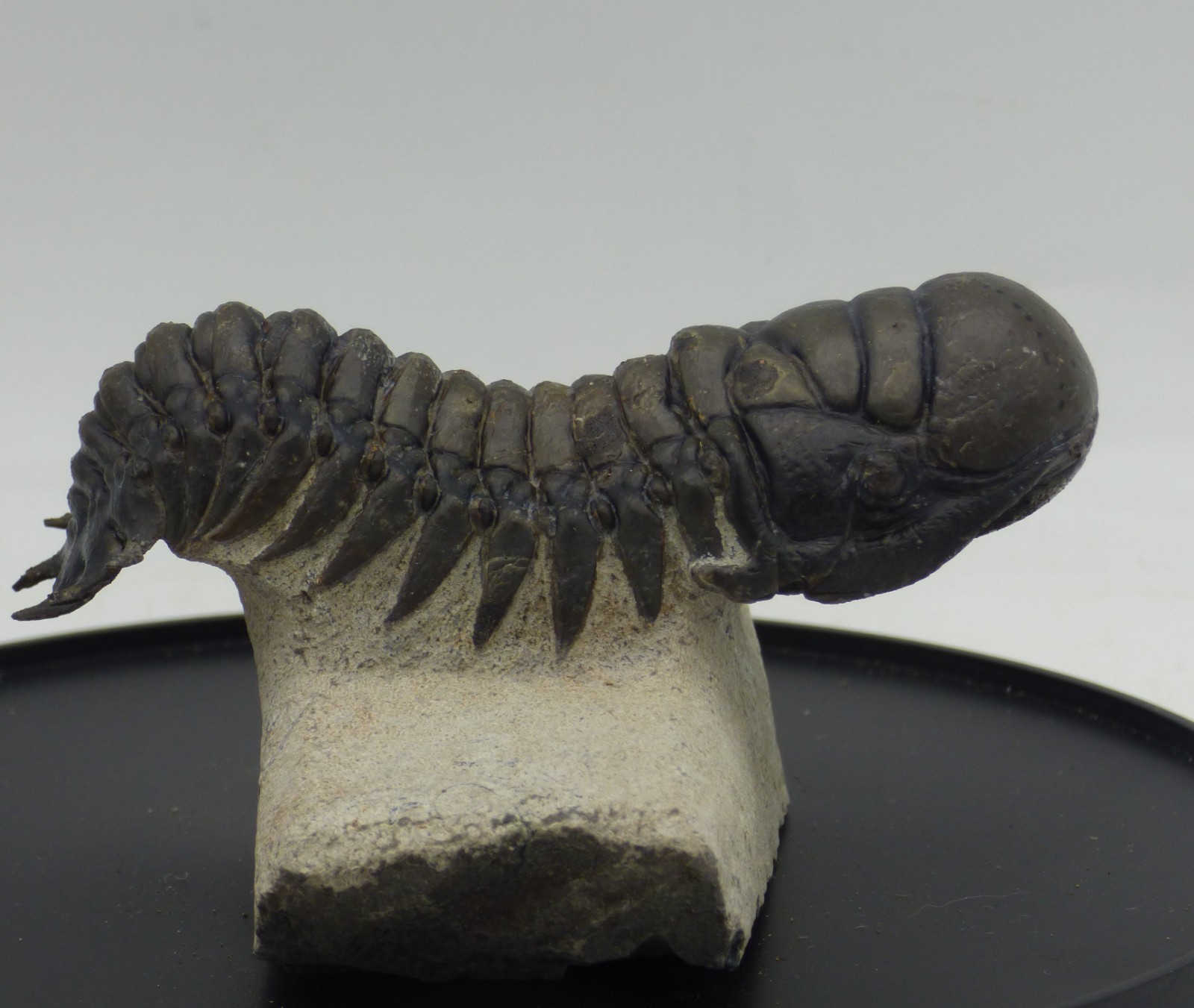
Trilobite fossil Zlichovaspis rugosa from Hamar Laghdad, Morocco. Very nicely prepared and detailed specimen with hypostome present. Domed display case.
Species: Zlichovaspis rugosa
Period: Devonian
Location: Hamar Laghdad, Morocco
Preparation: Detailed, hypostome preserved. The term hypostone refers to a specialized structure found in arthropods and some other organisms and associated with the feeding apparatus but very often not preserved in fossil trilobites. Extremely nicely and painstakingly prepared .
Presentation: Mounted and supplied in a domed clear acrylic display case THE TRILOBITE IS VERY DELICATE. IF YOU DID NOT LIVE TOO FAR FROM Gl7 6AS AREA WHERE I LIVE I COULD MEET YOU HALF WAY TO HAND OVER THE ITEM BUT OTHERWISE I WILL PACK IT INCREDIBLY CAREFULLY!
code 100-1222
What is a Fossil?
Fossils give fascinating prehistorical evidence of past life on our planet.
Usually, fossilization starts once the animal or plant has died. Most animals and plants are eaten or simply recycled back into the earth. The best fossils occur when this process happens rapidly, shortly after death has occurred. Conditions have to be exactly right for a fossil to be produced. Most commonly, this is below water. Decay and deterioration are slowed down because the specimen is covered or entombed in either sediment, muds, sands or volcanic ash or other material, layer upon layer, and over a period that is hard to imagine, usually thousands to millions of years.
Preservation takes place very gradually, as it compacts, it slowly turns to rock. Over time, the plant or animal is replaced by minerals and with chemical changes, leaving an extraordinary replica of the original. In some cases, the pressure and temperature increase, caused by sedimentation, can result in the release of hydrogen and oxygen, leaving a carbon impression of the specimen in sedimentary rock. This process is called carbonization.
Fossils can become preserved in various different ways. For example, wood can become petrified by a process of minerals seeping into the saturated wood, resulting in a gradual process of the wood becoming hard, and resembling stone, often with extraordinary colours. In perimineralization or petrification, after the soft structures have decayed, the hard parts, in particular bones, remain. In some cases, the other minerals completely replace the original specimen. Generally, most fossils represent the hard parts such as bones, shells, leaves, seeds or woody parts of plants.
Fossils can be internal or external moulds of the original specimen. They can also be the some of the original matter, impregnated with chemicals such as silica or calcite.
Fossils can also be indirect, such as in animal foot prints or burrows. These are known as trace