Late Roman / Early Byzantine Bronze Christian Cross Ring (Circa 4th–6th Century) For Sale
When you click on links to various merchants on this site and make a purchase, this can result in this site earning a commission. Affiliate programs and affiliations include, but are not limited to, the eBay Partner Network.
Late Roman / Early Byzantine Bronze Christian Cross Ring (Circa 4th–6th Century): $83.75
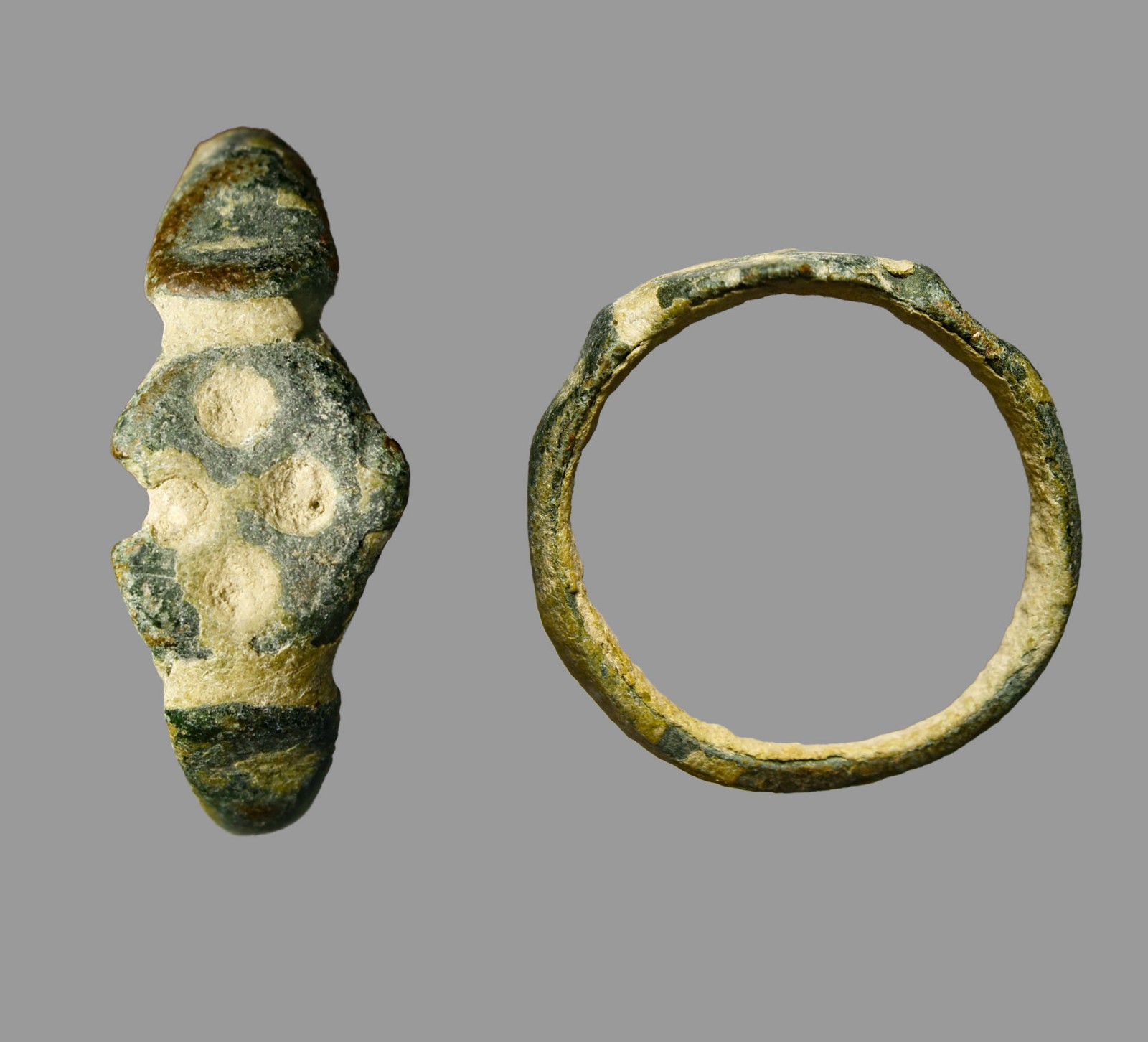
Late Roman / Early Byzantine Bronze Christian \"Pellet-Cross\" Ring (Circa 4th–6th Century AD) US Size 4.5 Authentic
Authenticity Notice
This artifact is certified authentic and will be accompanied by a Certificate of Authenticity and Provenance. All professional inventory is vetted through recognized platforms to ensure legal standing.
Details
Object: Early Christian Signet / Devotional Ring
Culture: Late Roman / Early Byzantine
Date: Circa 350–550 AD
Material: Bronze (Copper-alloy)
Form: Lozenge-shaped elevated bezel featuring four punched pellet/drill indents forming a Christian cross, framed by pronounced shoulder collars and an integrated hoop
Ring Size: US Size 4.5
Region: Holy Land / Levant Finds
Iconographic Analysis: The Early Christian Pellet Cross
This bronze ring features a classic Early Christian devotional motif used across the Eastern provinces of the Roman and Byzantine Empires.
The Design: The raised, almond/lozenge-shaped bezel is deeply stamped with four circular indents (pellets or drilled points) arranged in a distinct cruciform pattern.
Symbolic Meaning: During the early post-Constantinian era, ring makers frequently used simplified geometric arrangements—such as the four-pellet cross—to signify the Christian faith subtly or boldly. The four dots represent the four arms of the Holy Cross and the spread of the Gospel to the four corners of the earth.
Overview and Historical Context
Following the legalization of Christianity under Constantine and its establishment as the state religion, personal items featuring Christian symbols became widespread throughout the Roman Holy Land. Rings of small proportions (US Size 4.5) were typically worn by women, adolescents, or worn on the upper joint/pinky finger by men. Beyond serving as personal ornament, these devotional rings acted as personal talismans (apotropaia) intended to invoke spiritual protection over the wearer in daily life and travel across the Holy Land.
Authenticity Check
Patina: Displays a well-preserved, layered mottled forest-green, dark charcoal, and desert-tan patina, with natural cream-colored caliche encrustation highlighting the recessed pellets and shoulder grooves.
Comparable Examples
The British Museum, London: Accession No. 1917,0501.758 (Late Roman / Early Byzantine bronze rings with geometric and cruciform motifs).
Dumbarton Oaks, Washington D.C.: Extensive collection of Early Christian personal rings and pilgrim jewelry from the Levant.
The Israel Museum, Jerusalem: Late Roman and Early Byzantine personal bronzes found in the Judaean region.
Superior archaeological condition. The bronze is structurally sound and rigid, retaining its complete original form. The cruciform pellet engraving is sharply defined under a natural, museum-grade patina.