When you click on links to various merchants on this site and make a purchase, this can result in this site earning a commission. Affiliate programs and affiliations include, but are not limited to, the eBay Partner Network.
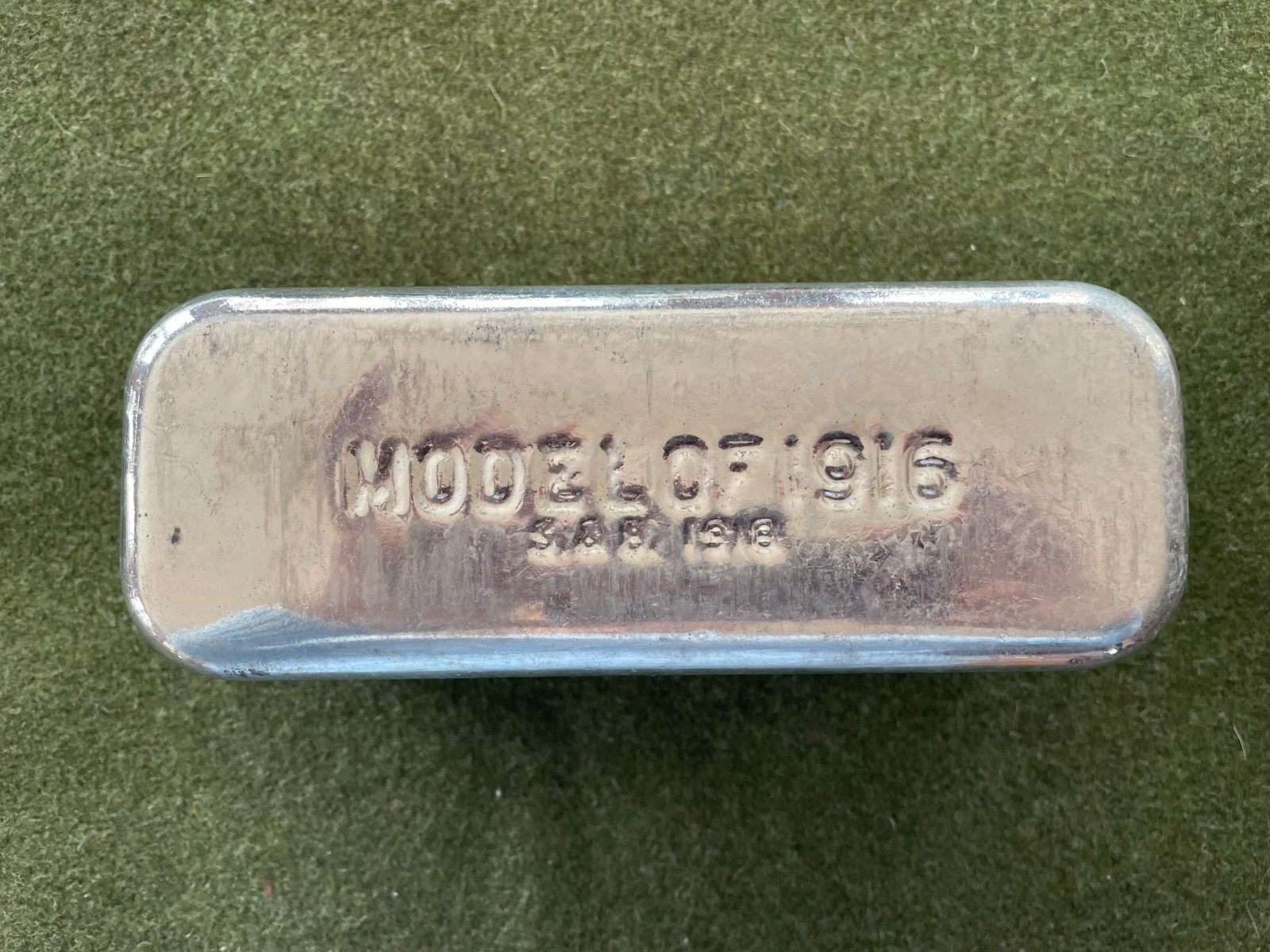
New Old Stock found in the basement of an1800\'s hardware still crated. TheseSturges & Burn Mfg. Co. meat tinsare in pristine condition and a highly unusual specimen of antique ration tins. They\'re stunning. This listing is for one tin.Please message with questions. Additional quantities are discounted in my other listings.
The M-1916 Bacon cans were designed to prevent leakage and augment thefunction of meat cans in holding rations, thereby allowing meat cans to be usedprimarily for cooking and eating.The bacon can was a tinned iron can that held uncooked reservemeat rations. The lid of the bacon can was secured by friction and the can wasstored upright in the haversack to prevent grease from spilling onto the restof the gear. When the bacon can was empty, it had enough space to holdthe M-1910 condiment can, thus saving space in the haversack.\"An Army Marches on its Stomach” is the phraseattributed to Napoleon, and in World War I American soldiers were issued a meatration, usually cured bacon or salt pork that would not spoil soon, which wascarried in this Model 1916 Bacon Can.
30 Day Free Return window if item is not as described.
Combined Shipping for multiple items purchased when shippingto the same address.
Ask any questions BEFORE purchase!
Trivia:The WWI-era AEF, or AmericanExpeditionary Forces, was the United States military force sent to fight in Europe during World War I. Commanded by GeneralJohn J. Pershing, the AEF fought alongside Alliedforces, playing a crucial role in the final months of the war and tipping thebalance in favor of the Allies. Pershing insisted that American forces fight asa distinct unit rather than being absorbed into French or British armies, whichled to the formation of field armies like the First Army under the AEF.
GeneralJohn J. Pershingwas the commander-in-chief of the AEF. The AEF grew toinclude hundreds of thousands of soldiers, and as numbers increased, it wasorganized into field armies, with the First Army being established on August10, 1918, to command American forces on the Western Front.