When you click on links to various merchants on this site and make a purchase, this can result in this site earning a commission. Affiliate programs and affiliations include, but are not limited to, the eBay Partner Network.
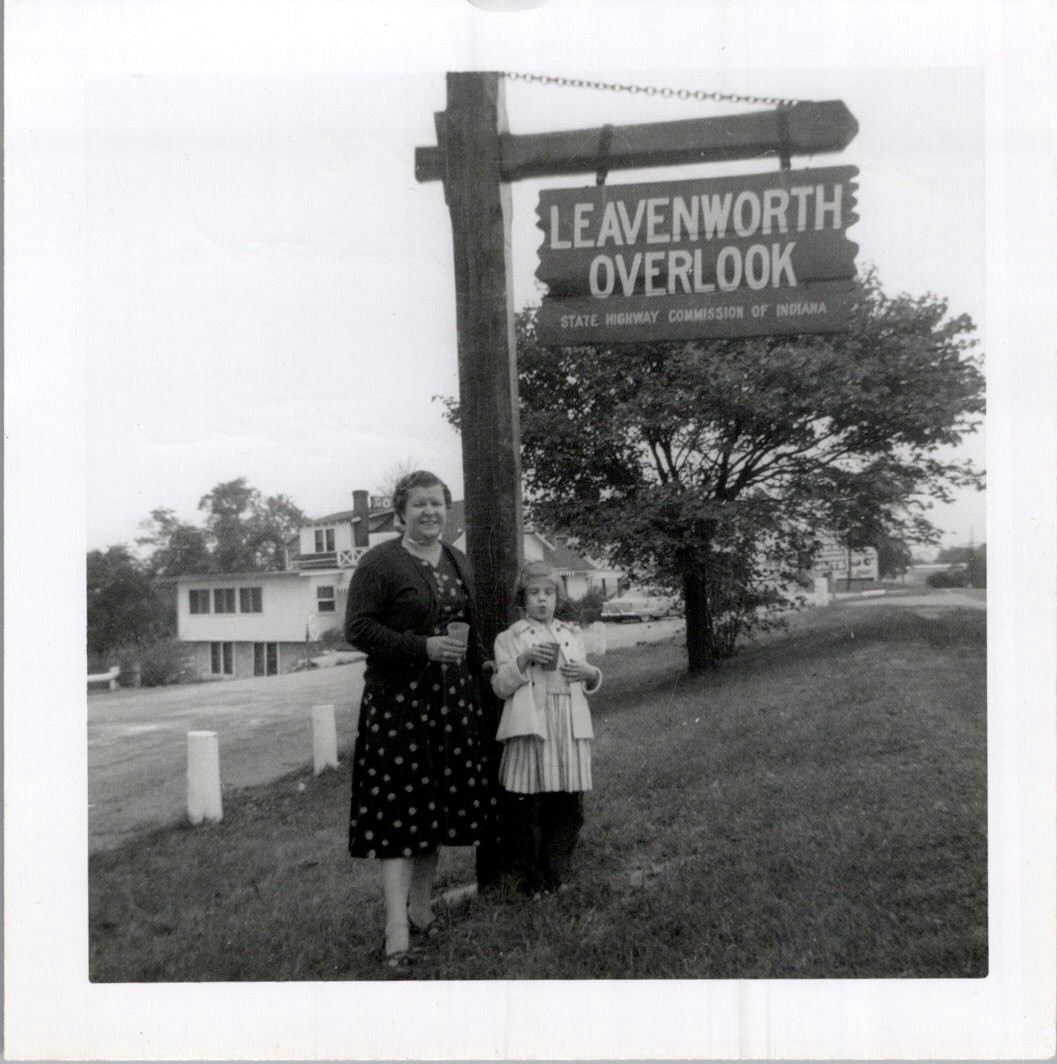
A mid-century black-and-white photograph captures two figures beside the substantial wooden sign marking the Leavenworth Overlook in Crawford County, Indiana. The dated inscription on the reverse, September 23, 1956, firmly anchors the scene in the autumn of that year, while the names Madelia Smith and Janet Switzer identify the individuals associated with the image. The woman, likely Madelia, stands on the left, dressed in a light-toned, polka-dot dress beneath a dark cardigan, accessorized with a necklace and open-toed shoes, holding a clear cup. Beside her, a young girl, presumably Janet, is partially framed by the signpost, wearing a light-colored coat over dark pants, also holding a cup, suggesting a pause during a roadside refreshment stop. The carved wooden signage, which credits the State Highway Commission of Indiana, is a prominent feature of the composition, its rustic construction typical of the era’s roadside improvements designed to encourage automobile tourism. The setting is a grassy slope overlooking the Ohio River valley, with a large deciduous tree and a distant view of buildings, including a multi-story white house with a distinctive X-pattern detail on its upper facade. White cylindrical bollards line the edge of the viewing area, reinforcing the site’s purpose as a designated scenic turnout. The print itself is a silver gelatin photograph on Kodak Velox paper, a common medium for amateur photography of the period, and exhibits a slight vertical crease and minor edge wear consistent with decades of storage. The clothing, the signage, and the leisurely roadside stop all reflect the popular culture of mid-1950s American family travel, when state-sponsored scenic overlooks were integral to the growing highway experience. The clear legibility of the handwritten date and names on the verso provides a valuable provenance, transforming a simple snapshot into a documented artifact of personal and regional history. The image’s straightforward composition and unpretentious subject matter offer a candid glimpse into the vernacular photography of the era, capturing a moment of everyday life framed by the broader context of postwar American mobility and the appreciation of natural scenery.