Antique 1880 - 1900 Circus Wagon Tiger Head Carved Wood Carnival 18 Inches For Sale
When you click on links to various merchants on this site and make a purchase, this can result in this site earning a commission. Affiliate programs and affiliations include, but are not limited to, the eBay Partner Network.
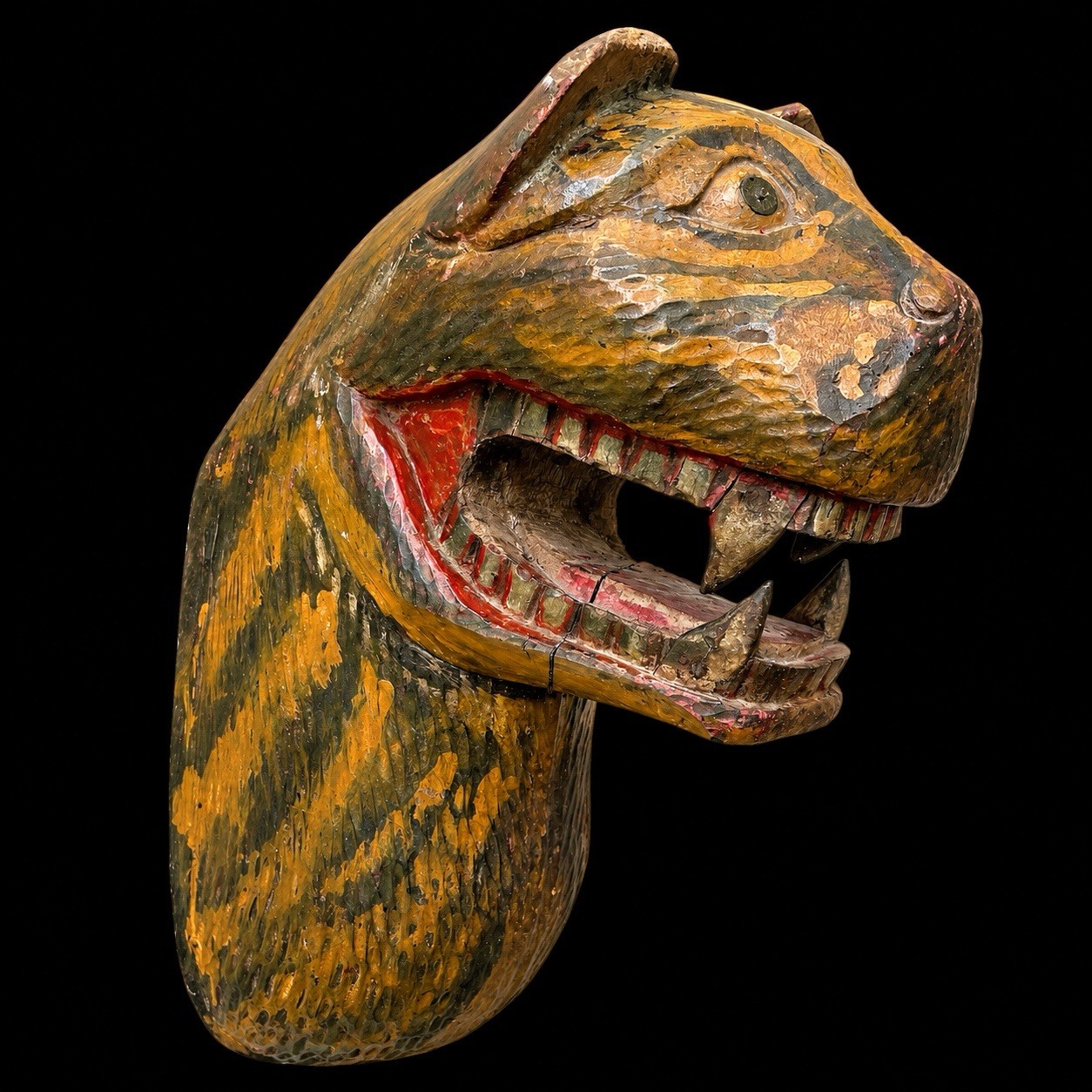
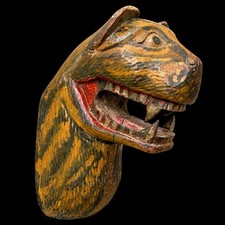
Exceptional late 19th century American circus wagon carving, depicting a ferocious tiger with open mouth, individually carved teeth and large projecting fangs. Hand carved from dense wood and retaining its original polychrome decoration in ochre yellow, black, red and other colors.Dating to approximately 1880 - 1900, this large architectural carving was made as a projecting ornament for a circus or traveling show structure, very likely a circus animal cage wagon.Its construction is particularly telling. Unlike the shallow carved panels also used on circus wagons, this tiger is an exceptionally deep, almost fully three-dimensional carving. The head projects approximately 10 inches, while the reverse of the long neck has been deliberately cut flat to mount against a structural surface. The back retains old attachment holes and other evidence of its original installation; the small metal hanging bracket currently present is likely a later addition.This form has documented precedent in 19th century American wagon construction. Period descriptions distinguish shallow decorative relief carving from substantially projecting corner figures carved in the round and flattened at the rear for attachment. Surviving circus-wagon carvings include similarly projecting feline and animal-head ornaments, including examples associated with C. W. Parker and the elaborate carved decoration of Ringling circus wagons.The tiger also belongs to the tradition of specialist American circus-wagon carving that flourished during the final decades of the 19th century. Much of this work was produced by dedicated wagon and ornamental carving shops, with an important concentration of craftsmen and suppliers in New York. The Fielding Brothers/Sebastian carving network is particularly relevant to this type of work; Sullivan & Eagle and later C. W. Parker are among the other names associated with highly carved American show wagons. The celebrated New York woodcarver Samuel A. Robb also worked within the broader world of commercial architectural, trade-figure and show carving of the period. While this tiger cannot presently be assigned to a specific carver or shop, its construction, scale, surface and carving place it firmly within that late-19th-century American show-carving tradition.The tiger measures approximately 18 inches high/long by 12 inches wide, with the head projecting approximately 10 inches from the rear mounting plane. It is extremely substantial and heavy for its size.The surface is particularly compelling, retaining of old show paint. There is extensive expected wear from age and use, including paint loss, abrasions, old mounting holes, scattered losses and a substantial old age/shrinkage crack in the jaw. The mouth, teeth and fangs show additional wear and losses, all visible in the photographs. The piece has been left in its wonderfully worn, untouched state.A rare and exceptionally sculptural survivor from the golden age of the American traveling circus, with the scale, projection and exuberant carving intended to be read from a distance on a richly decorated show wagon.