When you click on links to various merchants on this site and make a purchase, this can result in this site earning a commission. Affiliate programs and affiliations include, but are not limited to, the eBay Partner Network.
About the item:
Dive into the charm of yesteryear with this authentic vintage document, a captivating piece of ephemera that transports you to the simpler days of handwritten ledgers and beautifully intricate lithography. These historical artifacts offer a window into a bygone era of commercial life, showcasing elegant designs, regional specialties, and everyday transactions that evoke nostalgia and cultural insight. Perfect for collectors, historians, or even decorators, they serve as unique time capsules—affordable, one-of-a-kind relics that connect us to our past, stirring memories and sparking conversations. Preserve a slice of history; add this evocative document to your collection today!
Specifics:
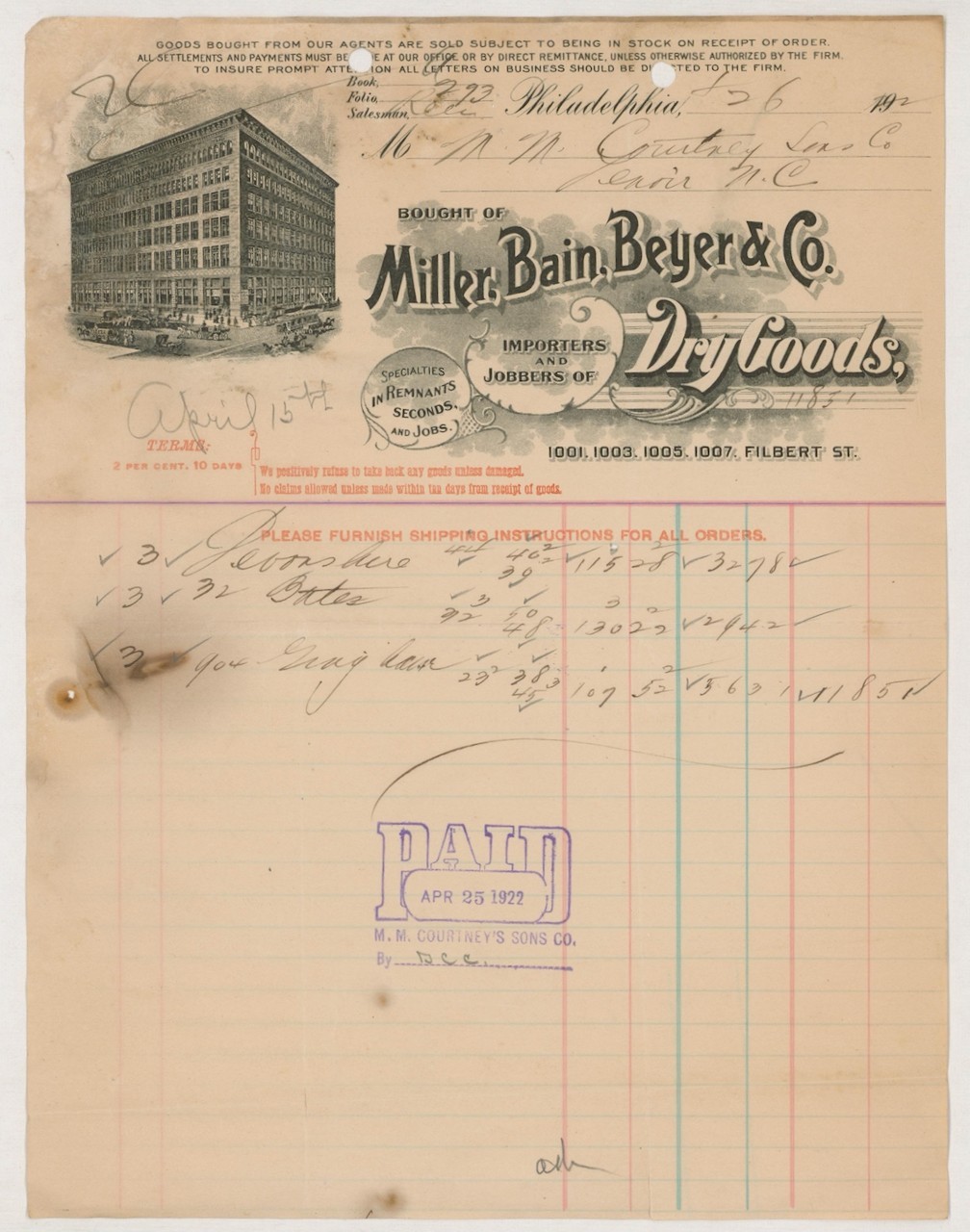
Authentic—not a reproduction—this over 100-year-old document is anMiller, Bain, Beyer & Co. Dry Goodsinvoice and is dated 1922 (at this time, Europe was grappling with the aftermath of World War I, as the Treaty of Versailles reshaped borders and economies, while the newly formed League of Nations sought to maintain global peace amid rising tensions and colonial unrest). It measures approximately 8 1/2 x 11 inches. In fair condition, with natural tan patina from age, enhancing its charm, it does have some soiling, creasing, and staining as well as a small - less than one inch long - tear at the bottom. It features pre-printed and handwritten elements. Both sides are shown in the scans.
About the company:
Established in 1895 in Philadelphia\'s dynamic textile quarter, Miller, Bain, Beyer & Co. Dry Goods carved a niche as a premier wholesaler of fabrics, linens, and apparel, serving retailers from the Atlantic seaboard to the Midwest. Formed through the partnership of industry veterans Miller, Bain, and Beyer, the firm capitalized on the city\'s port and rail networks to import fine cottons, woolens, and novelties from Europe, while producing custom lines in local mills. It flourished during the Progressive Era\'s consumer surge, issuing vibrant catalogs and sample books that showcased innovative patterns and dyes, employing over 100 workers by 1910. The company endured World War I supply disruptions but succumbed to the Great Depression\'s retail collapse and synthetic fabric competition, closing in 1930 after 35 years of operation.