When you click on links to various merchants on this site and make a purchase, this can result in this site earning a commission. Affiliate programs and affiliations include, but are not limited to, the eBay Partner Network.
- Shipping
- We always Combine Shipping. You only pay $5.50 for thefirst item all additional items ship Free.
All Orders are shipped USPS Package GROUND ADVANTAGE with insurance &Tracking.
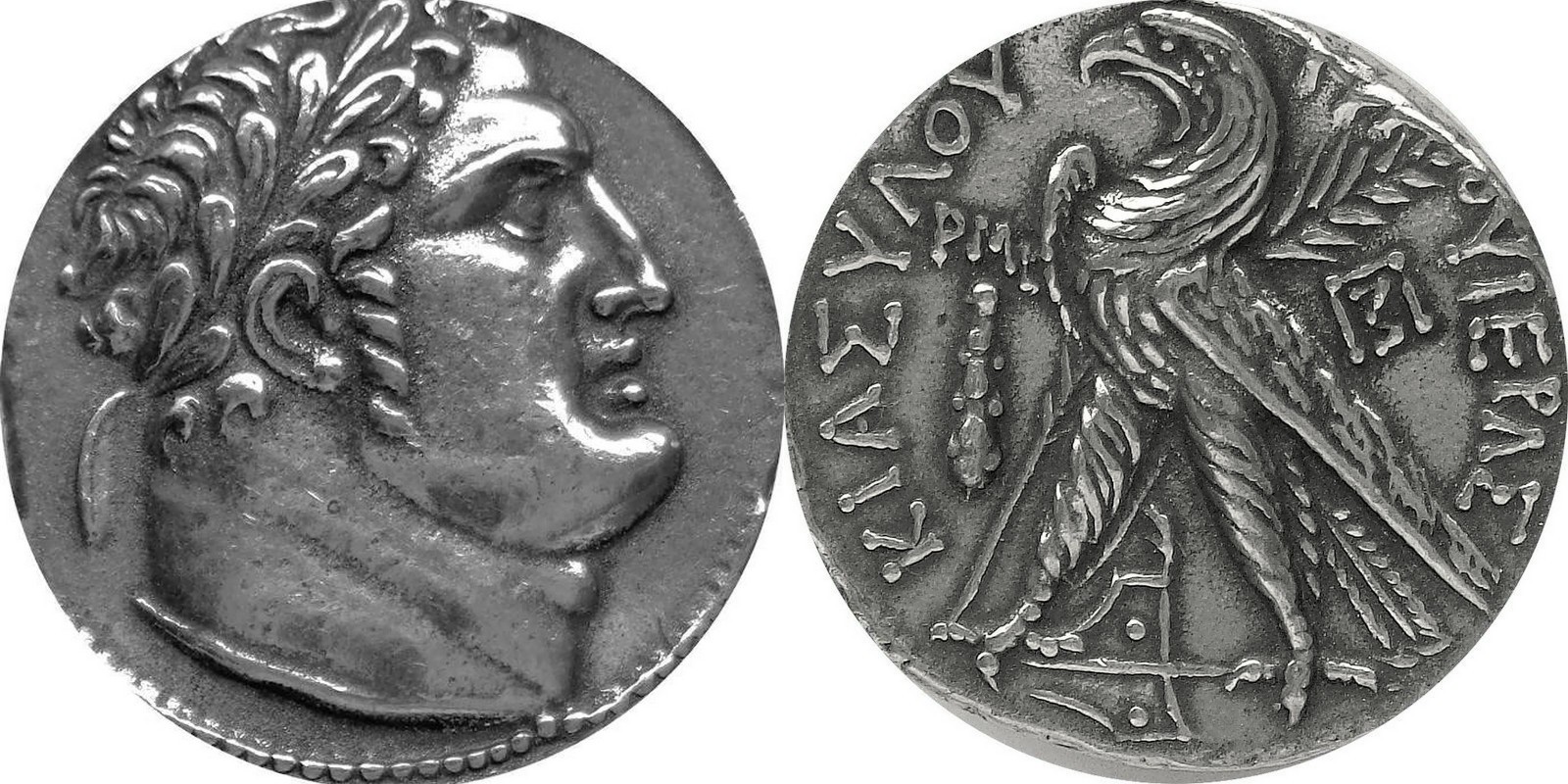
Size 25mm. Obverse: Head of Melqart, the god of Tyre, aka Baal, aka Heracles.Reverse: Eagle inscribed with the legend “Tyre, the Holy and Inviolable.”
Matthew 26:14-15: 'Then one of the 12 called Judas Iscariot went unto the chief priests and said unto them 'What will ye give me and I will deliver him unto you?' And they covenanted with him for 30 pieces of silver.'
Shekels of Tyre were the only currency accepted at the Jerusalem Temple and are the Pmost likely coinage with which Judas was paid for the betrayal of Christ. The silver shekels and half-shekels of Tyre were minted from c. 126 B.C. until c. 57 A.D. Any coin minted prior to 32 A.D. may have circulated in Jerusalem during Jesus' lifetime.
Matthew 17:24-27 '...go to the sea and cast a hook and take up the fish that first cometh up and when thou has opened his mouth thou shalt find a piece of money: that take and give unto them [the temple tax collectors] for me and thee.' Since the tax was one half shekel per man the coin would have to be a shekel to pay the tax for both Jesus and Peter.
When Rome conquered Judea in the first century B.C., they disallowed the minting of local currency. By Talmudic law the Temple tax had to be paid in coins of high purity silver, and the shekels of Tyre were the only ones that qualified.
They left a lot to be desired in other religious respects, though. Tyre shekels had the head of Melqart, the god of Tyre, aka Baal, aka Heracles, on the obverse and an eagle on the reverse and were inscribed with the legend “Tyre, the Holy and Inviolable,” thus making mincemeat of the First Commandment prohibition against graven images of animals and deities.
Since observant Jews would not carry coins bearing graven images and inscriptions calling Phoenician cities holy, and since the Temple would only accept Tyre shekels, a thriving market of money changers grew up in the Temple courtyards. Devout Jews would purchase Tyre shekels with non-blasphemous currency and pay their Temple tax with the purer silver. Those money changers charged exorbitant rates for this service, and according to the gospel of Matthew, it’s their tables an enraged Jesus overturned for making his Temple into a den of thieves. The coin is so valuable because it was a prototype.
Track Page Views With
Auctiva's Counter