When you click on links to various merchants on this site and make a purchase, this can result in this site earning a commission. Affiliate programs and affiliations include, but are not limited to, the eBay Partner Network.
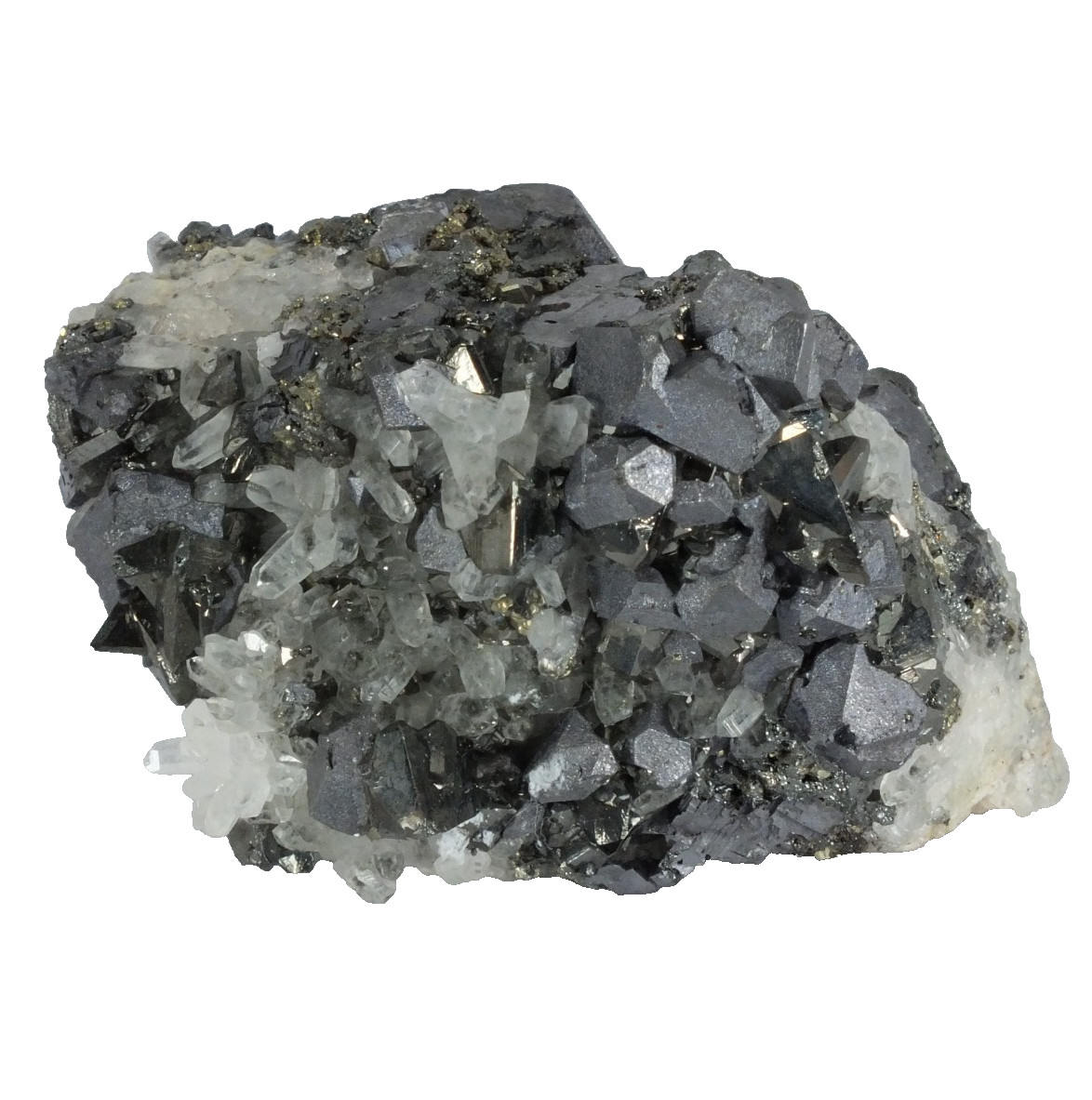
This compact and well-composed specimen from Casapalca, Lima Department, Peru, features clear to lightly milky quartz crystals intergrown with galena and tetrahedrite. Measuring 40 × 30 × 25 mm and weighing 62 grams, the quartz occurs as short prismatic crystals with clean faces and intact terminations, forming a bright vitreous framework for the associated sulphides. Galena appears as dense lead-grey metallic masses with reflective cleavage surfaces, while tetrahedrite contributes darker steel-grey tones and fine crystalline texture. The contrast between transparent quartz and opaque sulphides gives the specimen strong visual balance and clarity.
Casapalca is a classic high-altitude polymetallic mining district, renowned for its complex hydrothermal vein systems. Quartz crystallised from silica-rich fluids migrating through fractures in the Andean host rocks, providing the primary gangue mineral for sulphide deposition. Galena and tetrahedrite formed under sulphur-rich conditions during evolving stages of mineralisation, reflecting changes in temperature, pressure, and fluid chemistry within the system. This association is characteristic of the district and records the dynamic processes involved in Andean polymetallic ore formation.
The specimen shows good preservation, with quartz crystals retaining sharp edges and minimal contact damage. The galena displays clean, reflective cleavage planes, while the tetrahedrite remains well defined without significant oxidation. Subtle variations in crystal size and orientation add depth and texture, and the intergrown nature of the minerals allows each species to be clearly distinguished while maintaining a natural, undisturbed appearance.
Collected in the 2000s and preserved within the A & G McDonald Collection, this specimen represents quality modern-era Casapalca material from a historically important Peruvian locality. Its clear mineral associations, compact proportions, and strong provenance make it an appealing addition for collectors of South American minerals or classic polymetallic sulphide assemblages. As both a geological record and a refined display specimen, it reflects the mineralogical richness and enduring appeal of the Casapalca district.