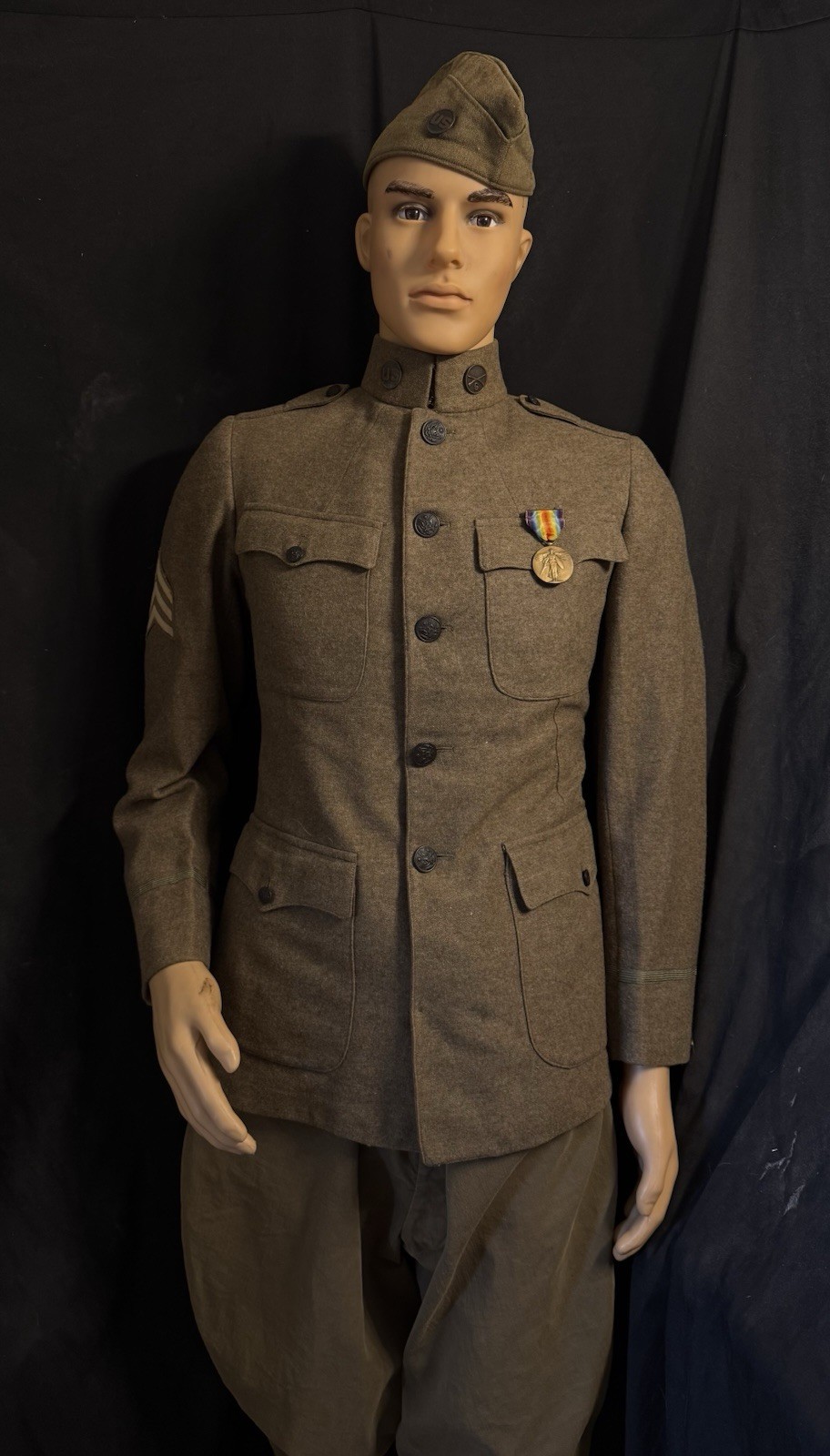
WWI Service Coat • FIELD PROMOTED OFFICER REVERT BACK TO SGT w/Green Mohair Cuff For Sale
When you click on links to various merchants on this site and make a purchase, this can result in this site earning a commission. Affiliate programs and affiliations include, but are not limited to, the eBay Partner Network.
WWI Service Coat • FIELD PROMOTED OFFICER REVERT BACK TO SGT w/Green Mohair Cuff: $500.00
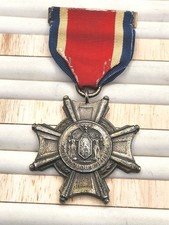
NOTE : Pricing is due to rarity. If anyone can find that a Post War Field Promoted Sgt to Officer, then reverted back to NCO after the war with green mohair cuffs uniform is for sale currently or within the last year I will reduce the price. I cannot replace this uniform it it sells and this is the price worth it for me to get rid of it. I hope that you understand.For your consideration is this EXTREMELY RARE WWI, M1917 Officer’s Wool Service Coat with GREEN MOHAIR CUFFS at the wrist & SERGEANT CHEVRON on right sleeve.This group includes the NCO coat with green mohair cuffs and overseas cap. Based on September 1919 regulations, U.S. Army enlisted men (NCOs) who were commissioned as officers in the American Expeditionary Forces (AEF) and later reverted to their previous NCO rank post-Armistice were authorized to wear forest green mohair cuff braid. This braid signified their service as a commissioned officer.These green mohair cuffs allow former field promoted Officers, who chose to revert back to their original NCO rank, and stay within the Army, retain a visible and honorable sign of their wartime leadership.During WWI, the U.S. Army rapidly expanded, requiring many NCOs to be commissioned as "temporary officers" to meet leadership demands. Following the 1918 Armistice and subsequent massive military contraction—reducing forces from 250,000 to 20,000 in one year—these temporary officers often reverted to their previous NCO ranks or were discharged.Authorization: Special Army Regulation No. 41, dated September 2, 1919, authorized : Significance: forest green Mohair braid on the sleeve cuff (typically ~3 inches from the cuff edge) this indicated that the NCO had been a field-promoted or temporary officer during The Great War.Uniform Type: The uniform was typically the olive drab wool service coat (M1912 or M1917).Appearance: This braid often appeared on private-purchase coats, as officers were responsible for purchasing their own uniforms. This unique marking allowed former officers who returned to enlisted status to retain a visible, honorable sign of their wartime leadership.