When you click on links to various merchants on this site and make a purchase, this can result in this site earning a commission. Affiliate programs and affiliations include, but are not limited to, the eBay Partner Network.
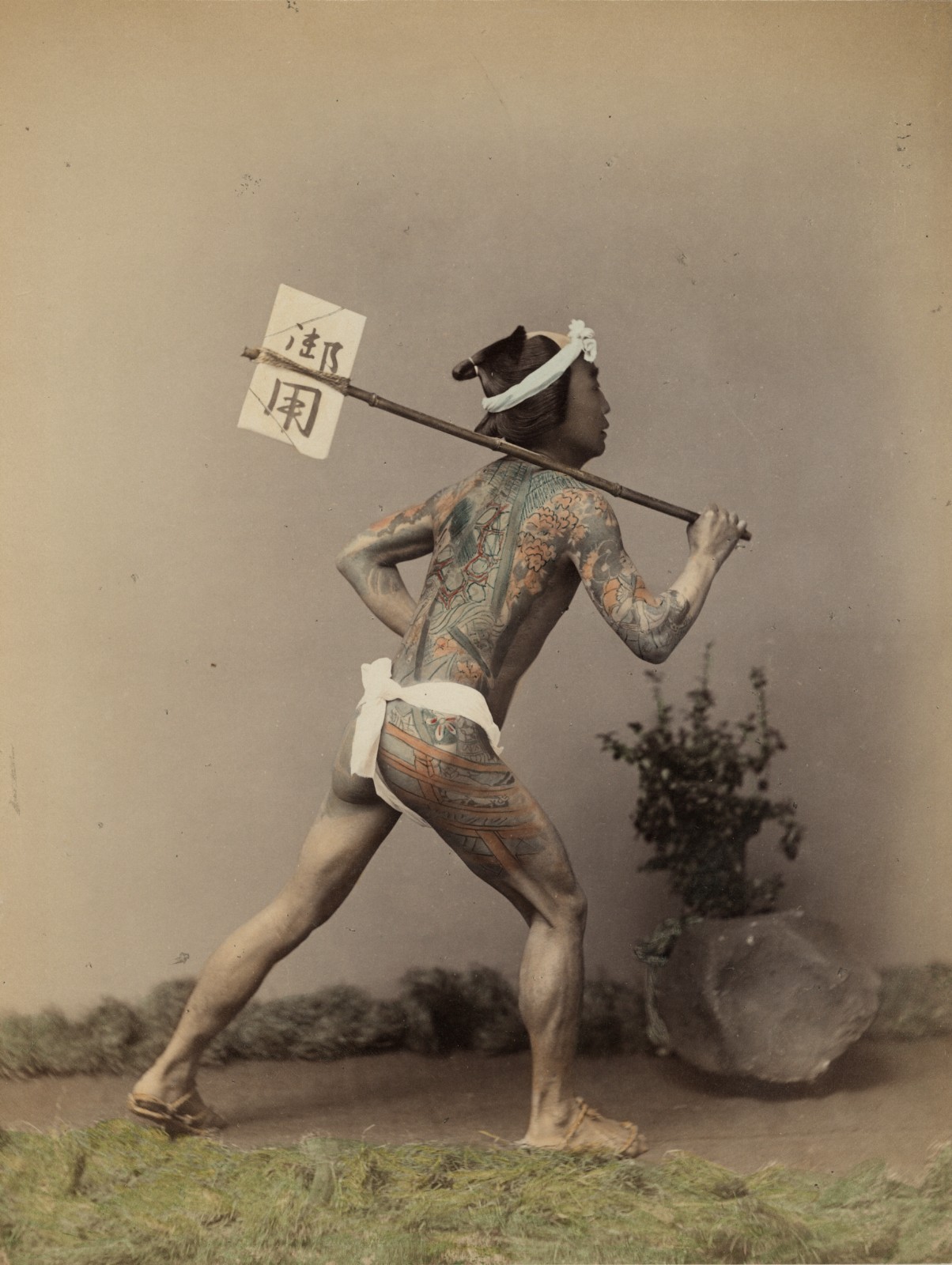
DATE: c. 1860'sPHOTOGRAPHER: Felice Beato (see bio below)PROCESS: Hand-Colored AlbumenSIZE: Paper measures 8.375" x 10.875" and mounted photo measures 7.625" x 10"CONDITION: See photosSHIPPING: Shipping cost is non-negotiable, please consider it when offerding/buying.COMBINED SHIPPING: Yes, I do combine shipping. Additional shipping per item is 20% of the lower shipping cost [For example, if 2 items are purchased that have a $30 and $10 shipping cost each, the combined shipping cost becomes $32 for the 2 items]. If offerding/buying more than 1 item, please wait for an invoice with combined shipping before Beato (c. 1832–1909), also known as Felix Beato, was an Italian–British photographer whose pioneering work helped establish war photography, travel photography, and documentary photography as significant artistic and historical genres. Although his exact birthplace remains uncertain, with Venice and Corfu both proposed by scholars, he spent much of his career traveling throughout the eastern Mediterranean and Asia at a time when photography was still in its infancy. His images of landscapes, architecture, portraits, and military campaigns introduced many European and North American audiences to places they had never seen, while his technical innovations in panoramic photography and hand-colored albumen prints influenced generations of photographers.Beato began his photographic career during the 1850s, initially working with his brother-in-law, the Scottish photographer James Robertson. Together they documented the aftermath of the Crimean War before traveling extensively through the eastern Mediterranean and the Holy Land. In 1858 Beato journeyed to India to photograph the aftermath of the Indian Rebellion of 1857, producing some of the earliest and most influential photographic records of the conflict. His stark images of ruined cities and battlefields, including photographs showing the dead, represented a major departure from earlier, more restrained depictions of war and are widely regarded as among the first examples of modern photojournalism.In 1860 Beato accompanied British and French forces during the Second Opium War in China, photographing the military campaign, the forts at Taku, and the aftermath of the capture of Beijing. Three years later he settled in Yokohama, Japan, where he remained until 1877. There he established one of the country's leading commercial photography studios, producing hundreds of meticulously composed views, portraits, and genre scenes. His photographs, many of them carefully hand-colored by Japanese artists, became highly sought-after souvenirs for foreign visitors and played a central role in shaping Western perceptions of Japan during the late Edo and early Meiji periods. Beato also mentored and collaborated with several early Japanese photographers, leaving a lasting influence on the development of photography in the country.After leaving Japan, Beato relocated to Burma, where he operated both a photography business and a successful curio and furniture enterprise. He continued photographing throughout Asia, including documenting the British military campaign in Sudan during the 1880s. Although many of his photographs were widely reproduced in books, newspapers, engravings, and travel publications—sometimes without attribution—his work became one of the defining visual records of nineteenth-century Asia and colonial expansion. Confusion over photographs signed "Felice A. Beato" or "Felice Antonio Beato," which were sometimes collaborative works with his brother Antonio Beato, complicated the attribution of many images until modern scholarship clarified the distinction between the two photographers.Long believed to have died in Burma, Beato was conclusively shown through the discovery of his death certificate to have died in Florence, Italy, on 29 January 1909. Today his photographs are held in major museum and archival collections worldwide and are recognized for their artistic quality as well as their exceptional documentary value. His images remain among the most important visual records of nineteenth-century Asia, and his pioneering approach to photographing warfare, distant cultures, and monumental landscapes established many of the conventions that later defined documentary and journalistic photography.